
Advanced Hydrocarbon Blending Solutions
Technics provides a robust and fully automated process to enhance revenue at low capital cost and with minimal operational burden.
C4+ Blenders
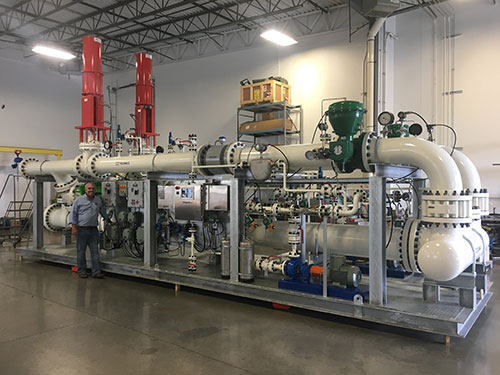
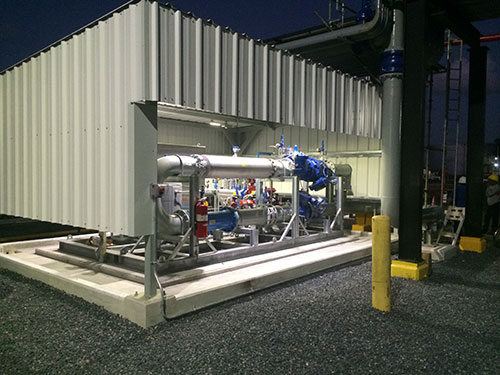
Technics’ well-executed process delivers On-Spec product On-Time. Our systems can be designed for bidirectional flow and the use of parallel controlled butane and C5+ flow provides extremely tight dosing to within 0.05%. Proper pre-dispersion and homogenization ensure that our samples are completely representative.
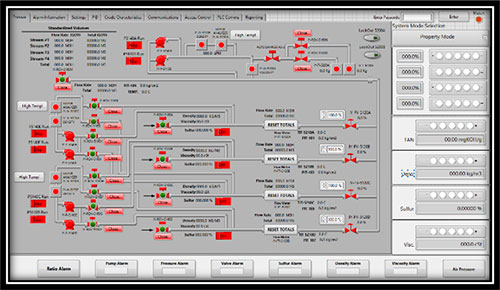
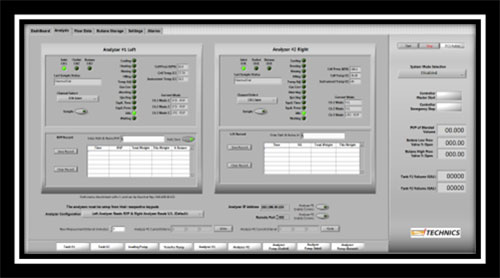
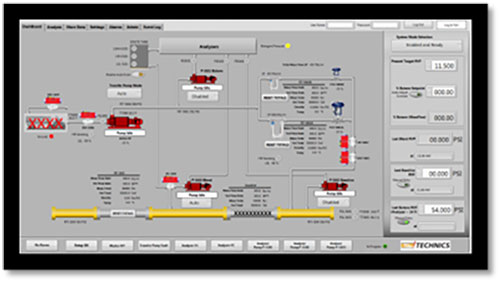
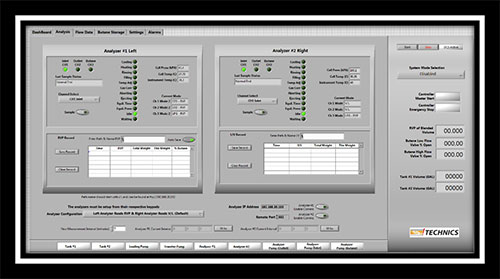
The Technics Blending Process is powered by our LOGOS platform for analysis and control.
Ensuring Blended Product within Spec at All Times.
Crude Blending
Technics Inline Blenders for crude oil applications are used to match your feedstocks to the needs of the downstream customer thereby enhancing profitability and in some cases the usability of certain stocks.
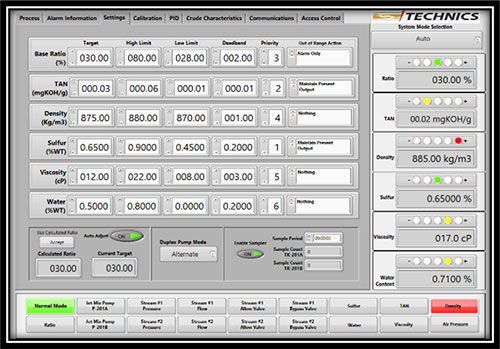
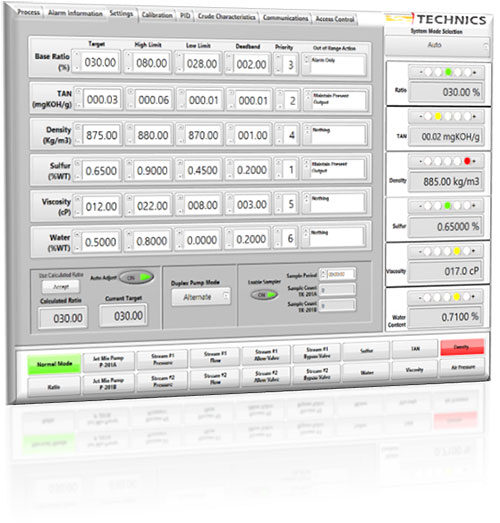
Technics Blenders can be Dual and Multi-Channel and optimized to prepare quality stocks that meet targets for Sulfur, Vapor Pressure, Acidity, Viscosity, Density, and Water Content.
These systems utilize Technics’ LOGOS as the software management and operator interface platform.
LOGOS provides for precise blending and monitoring of any parameters available to the data acquisition system and the analyzers. The user can select a ratio control mode or an automatic update based on any of the measured variables. This feature adjusts the ratio of the feed streams such that the blend is optimized for Sulfur and Density and Viscosity as measured by the controller.
Ten Opportunities to Optimize the Hydrocarbon Value Chain from the Wellhead to Retail With Technics’ Logos Blending Systems
No matter how broad or narrow your position on the hydrocarbon value chain, whether you are strictly a producer or have assets from the well head to retail, inline blending can have a significant impact on your revenue stream. This paper will provide an overview of these opportunities through the supply path.
The revenue measurement is mostly straight forward with ROI periods measured in weeks and months not years. We will blend lower cost products with higher cost products thereby selling the lower cost products at a profit margin that is far greater than selling at its core spot price. This does not apply to refineries where the revenue enhancement comes from increased efficiency. It is possible that there are other benefits for terminal wholesalers because the addition of a blend system can change their classification to manufacturer and, in many countries, this provides a reduced tax rate.
All of this is possible because of short term volatility and medium term variation in the oil sector. Price disruptions, geography, regional climate variation, well output variation, and transport mechanisms are just a few of the events that provide opportunity both short and long term.
Opportunity #1 – Wellhead to Tank Battery (And FPSO’s)
The first stop for the crude after surfacing is separation, where the various gases including NGL’s are often flared. Fines are paid because there is seemingly no way to profit from their recovery. However, the C4+ (Butane, Pentane, etc.) has value.
In many situations, the C4+ can be recovered at low cost and blended into the crude oil, providing for a good return on investment. The addition of the C4+ will cause a change in vapor pressure and API gravity, but this is something that the Technics blender is constantly monitoring, throttling the amount of C4+ to exactly match the target specification.
Technics’ blending systems do not require the C4+ to be further separated, as it will change dosage rates automatically to compensate. The blending is performed as the enhanced crude is transported via pipeline or truck.
If blending along this path does not provide a healthy ROI, the recovered C4+ can be collected and transported to a tank battery or pipeline and blended at the next intercept points.
Opportunity #2 – Tank Battery to Pipeline
The tank battery is often the first stage of custody transfer, or at least where the crude has specifications that must be adhered to. As mentioned at the first intercept, gathered C4+ can be transported to this point. But C4+ can also be purchased along with any opportunity crude. Opportunity crudes are defined as products that, for quality or excess supply reasons, can be purchased at a significant discount.
The buyer’s requirements may limit the API gravity, Vapor Pressure, Water Content, and Viscosity. The blend system at this stage includes analyzers as required to ensure these targets are not exceeded while allowing for a close targeting of the limits and maximizing revenues.
Opportunity infers a short window of revenue enhancement. Technics’ blenders are available as mobile platforms. They can be moved in between tank batteries as opportunities arise due to the availability of the opportunity crude or C4+ or the room for quality enhancement of the stored crude.
Technics Blenders can source from stationary tanks or directly from the truck carrying butane and other C4+.
Opportunity #3 – Crude Oil Pipeline
The crude oil pipeline is a stage where serious revenues can be generated. The reason is that the pipeline sources crudes with a high variation of characteristics from many suppliers and delivers the product to many different customers with different requirements. This high variation allows the pipeline operator to blend in high volumes of C4+ and especially low-cost butane.
These blending systems are quite large and stationary. They typically require on-site storage for the butane, but can often use rail cars.
The Butane and other NGL’s are purchased products, making the estimation of ROI an easy task.
Opportunity #4 & #5 – Crude Oil Import/Export Terminals
This interception point has two of the same advantages as pipelines in that both the crude products are of wide-ranging quality, and the throughput is very high. They can have the additional benefit of having LPG facilities in place to store butane, thus greatly reducing the capital expenditure for adding a blend system. Even without the LPG facilities in place, large quantities of C4+, procured at a reduced cost, can be stored on a barge or vessel at the Jetty.
Should this LPG carrier be part of your value chain, it can be fitted with the blending facility onboard and blend during a ship’s loading or offloading, allowing it to be moved among ports as the opportunity arises.
Further, the availability of opportunity crudes is significantly higher as they can be sourced throughout the world.
Technics blenders can be designed to perform both crude/crude and C4+/crude blending during both the loading and offloading events.
Opportunity #6 - Refinery Feedstock
Technics’ crude blenders provide a method of blending various feedstocks, including opportunity crudes and slop. This is done to match the crude, not only to the CDU’s design specification but also to vary the crude oil feed in order to capitalize on the yield at any given time.
This is not unknown to any refinery operator, but it is currently performed by most with tank mixing. Technics Blenders can be configured for two or more streams, providing real-time adjustment to the tank. Tank blending takes days to mix, is difficult to analyze accurately, and the density/sulfur changes as the tank is drawn down. Technics Inline blenders monitor the output feed in real time, constantly adjusting the feedstocks as they change to create a consistent density, viscosity, and sulfur content of the feed to the CDU.
Your refinery was a huge capital investment, so there is every reason to use the various processes at their full capacity. If the desulphurization unit is capable of 2.0%, you can use it to its full capacity and increase revenue using opportunity crudes and slop. If the naphtha column is flooded due to the inherent yield of the feedstock, but your distillate output is not matching the demand, a Technics’ inline blender can rectify that.
Opportunity #7 - Refined Product at the Pipeline
Blending Opportunities in refined product are generally limited to butane injection into gasoline. The revenue enhancement occurs when you are effectively selling butane, which is the lowest constituent product of the gasoline cocktail, at gasoline prices. Here the spread can be much greater than that available with butane into crude oil.
Revenues can be quite high as well due to the large and consistent throughput. But capital costs are increased as butane storage facilities are required, receiving either from truck or rail.
The amount of butane that can be added to the gasoline varies substantially. There is a limit to the amount of butane because it is the driving factor in vapor pressure that is carefully controlled and monitored by the authorities. Further, this revenue enhancement is known by the refiner who is creating the gasoline blend, so the output of the refinery may be very close to the maximum allowable.
The opportunity arises because these vapor pressure restrictions are regional and change with the climate at a given time of the year. Refined products in pipelines cross these regions, allowing for an increase in the vapor pressure when gasoline created in a warm region is transported to the cooler regions.
Technics’ Butane into Gasoline blending systems carefully measure the vapor pressure of the blended product, allowing for a close approach to the mandated limits and maximizing revenue.
Opportunity #8 - Refined Product at the Distribution Terminal
Butane Blending at the distribution terminal has all of the advantages and disadvantages of the pipeline blending operation.
Revenues can be high, but are dependent on the size of the throughput. Because of the lower throughput, the capital cost of the butane storage facility is reduced. Further, many distribution facilities have existing LPG storage that can be used.
As the pipeline operation has one upstream competitor, the terminal now has two, both of whom are aware of the opportunity. However, one month of opportunity exists, depending on your region. The authorities dictate a lower vapor pressure as the climate warms, but place these restrictions upstream for a one-month period prior to the restriction on the terminal. This allows for the stock to be depleted, but should the terminal have the throughput, they can inject butane as the truck is loaded until the day the restrictions are active.
Opportunity #9 & #10 - Refined Product Import/Export Terminals
As with the former opportunities for blending butane into gasoline, the import/export terminal will enhance its revenue by selling low-cost butane at gasoline prices. A high throughput can provide excellent revenues and a quick ROI. Existing LPG storage facilities or the use of LPG vessels at the jetty can reduce the capital cost.
While the pipeline and distribution terminals capitalize on regional differences in vapor pressure allowances, the import/export terminal has regional variations throughout the world that can provide excellent opportunities. Keeping in mind that liquid hydrocarbons are extremely fungible, you can foresee a shipment from India arriving in the Northeastern United States during the winter months, allowing for an addition of Butane exceeding 10% of the ship capacity.
Technics’ blenders can be designed to perform blending during both the loading and offloading events.
Download the full report on Hydrocarbon Value Chain Opportunities or our brochure on Butane into Gasoline Blending
Frequently Asked Questions
How do inline blending systems improve profitability?
Inline blending improves profitability by allowing operators to blend lower-cost products with higher-value products, often producing ROI in weeks or months rather than years. In refinery applications, the benefit is described as improved process efficiency and better use of installed capacity.
Where can hydrocarbon blending systems be used?
Blending opportunities exist from the wellhead to retail, including the wellhead, tank battery, crude pipeline, import/export terminals, refinery feedstock, refined-product pipelines, and distribution terminals.
Can C4+ be blended into crude oil at the wellhead?
Yes. C4+ components such as butane and pentane can often be recovered at low cost and blended into crude oil, while the Technics system continuously monitors vapor pressure and API gravity and adjusts dosage to stay on target.
Can blending be performed at the tank battery?
Yes. At the tank battery, operators can blend gathered C4+ or discounted opportunity crude while using analyzers to stay within required limits for API gravity, vapor pressure, water content, and viscosity.
Does Technics offer mobile blending systems?
Yes. Our blenders are available as mobile platforms, allowing operators to move equipment between tank batteries or other locations when market conditions or product availability create a short-term opportunity.
What are the benefits of crude pipeline blending?
Crude pipelines as especially attractive because they receive crude from many suppliers with varying characteristics and deliver to customers with different requirements. That variation can create room to blend in high volumes of C4+ and low-cost butane.
Can blending systems be used at crude import/export terminals?
Yes. Crude import/export terminals are strong candidates because they typically combine high throughput, wide-ranging crude quality, and sometimes existing LPG storage, which can reduce capital cost for adding a blending system.
Can hydrocarbon blending be done during ship loading and offloading?
Yes. Technics blenders can be designed to perform blending during both loading and offloading events, including crude/crude and C4+/crude applications at import/export terminals.
How do inline blenders help refineries optimize feedstock?
Crude blenders combine multiple feedstocks, opportunity crudes, and slop in real time to better match CDU requirements and maintain a more consistent density, viscosity, and sulfur content than traditional tank blending.
Can butane be blended into gasoline?
Yes. Butane injection into gasoline is a major refined-product blending opportunity because it allows operators to sell low-cost butane at gasoline pricing, provided the finished blend stays within allowable vapor pressure limits.
Where can butane/gasoline blending systems be installed?
Butane/gasoline blending can be applied at the pipeline, distribution terminal, and import/export terminal, depending on throughput, storage availability, and regional vapor-pressure rules.
How do blending systems help maintain product specifications?
Technics systems use analyzers and automated control to closely target required specs while maximizing value. Depending on the application, the systems can monitor variables such as sulfur, vapor pressure, acidity, viscosity, density, and water content.
How accurate are Technics blending systems?
Technics systems can provide extremely tight dosing, with parallel controlled butane and C5+ flow delivering control to within 0.05%, while proper pre-dispersion and homogenization help ensure representative sampling.
Complete in-house design encompassing fluid dynamics, heat transfer, mechanical, electrical, controls, and software.
Certified Welding , Assembly, and Electrical to all Standards
Internal capabilities on a wide range of platforms.
30 Years of on-site support worldwide
- +1 (630) 938 4709
-
1005 Geneva Street
Shorewood, Illinois 60404 USA - Email: info@technicsglobal.com